The German philosopher Arthur Schopenhauer said: “[M]an does at all times only what he wills, and yet he does this necessarily. But this is because he already is what he wills.” — Chapter 5, On the Freedom of the Will
Albert Einstein paraphrased Schopenhauer in his essay My View of the World (1931): “A man can do as he will, but not will as he will.”
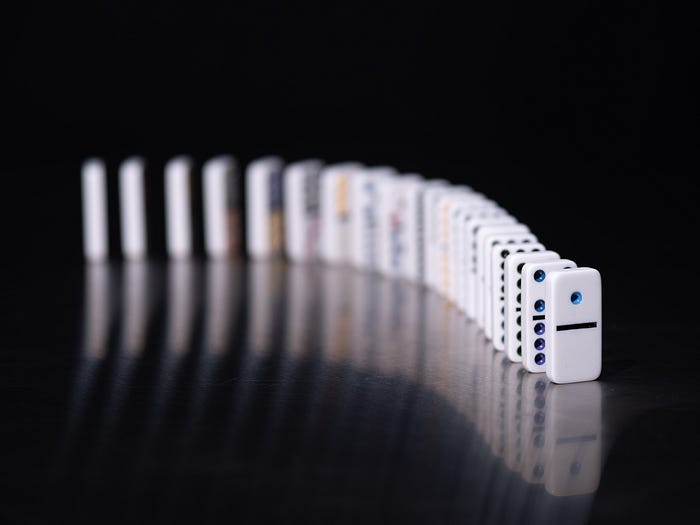
What Schopenhauer meant is that we can do what we want to do, but we cannot choose (or will) what we want. In this sense, we are not free — that is, what we want is determined by our nature (our evolutionary programming, our genetics, the circumstances we were born into, etc.). [Note: Schopenhauer, who died the year after Charles Darwin published On the Origin of Species (1859), conceived of our nature as being determined by a transcendental will to live, seek pleasure, and avoid pain.]
For example, if a person is hungry they may think that they are choosing to eat food, and that they are doing some freely willed action — that is, eating food because they wanted to do so; but they did not really choose to eat food, rather their determined / innate nature compelled them to eat food. And their genetics, their upbringing, the information they possess, and their environmental and material circumstances determined what type of food they would choose.
To break it down even more, the central nervous system has detected that glucose levels and stomach volume are getting low, causing the release of ghrelin (a hormone that plays a central role in the stimulation of appetite) from the stomach, which, in addition to other effects, causes the motivational state of hunger to manifest. These are automatic, unconscious processes which result in the person feeling like they are choosing to do something when they are really being compelled to do something.
Likewise, we may feel we have chosen to be attracted to a certain person due to a combination of their personality and physical/sexual traits, but this is not something we freely choose; rather, sexual attraction is determined by a combination of evolutionarily adaptive factors that are beyond our control.
Any example of a motivational state that we can think of can be explained in this manner, e.g., anger, thirst, jealousy, fear, disgust, etc. [Note: we can suppress things we want, like refusing food when we are hungry, but Schopenhauer would say that in this instance our character is such that this was not a choice; rather, our predisposition to asceticism or health consciousness (or whatever impulse caused us to refuse food) compelled us to refuse food. So, he would say that even when we override what our bodies initially tell us to do this is not a counter-example to his view. Rather, this would just be an example of a second order impulse overriding a basic, or first order, impulse.]
Schopenhauer’s conclusion was that we do not have free will in the way that most people think we do — that is, we do not freely choose to be the way that we are or do the things that we do. More specifically, Schopenhauer thought that our circumstances or situation (such as education / new information, change in resources or social environment, etc.) may change our behavior, but our character — our motivations, desires, or who we are on the inside — stays the same. Schopenhauer believed that we could override our often harmful nature (e.g., our egoistic desires), and live more peaceful and content lives, but that this required rigorous attention and philosophical contemplation. [Note: this would still not entail free will, but rather that we have taken on new “software” that results in different emotional and behavioral outcomes; the fact that we have taken on this new way of thinking was determined by our nature.]
Many other philosophers and scientists have found agreement with this deterministic view. By no means is it a fringe view.
That said, there is still disagreement within science and philosophy on the issue of free will (metaphysical libertarianism) vs. determinism. See: What do Philosophers Believe? (#7 on page 15).