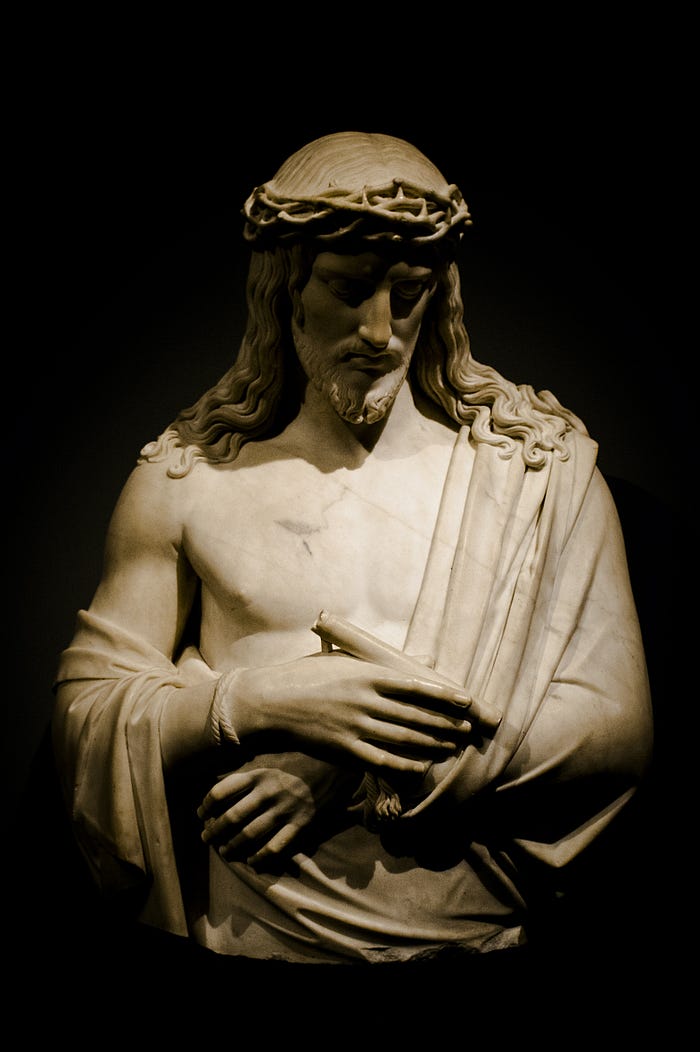
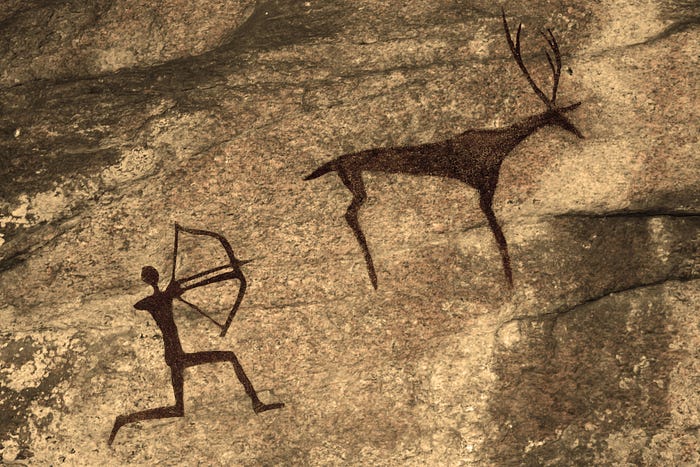
The unqualified term atheist is often used in a fairly broad way. Many atheists are weak or implicit atheists or agnostic atheists — that is, they are skeptical about classical theistic conceptions of God, but they might remain open to other possible theistic conceptions. For example, some people who use the “atheist” label are open to deistic or pantheistic conceptions of God, or “spiritual but not religious” ambiguities. Still, what unites most atheists is the rejection of any traditional, moralistic and interventionist deity.
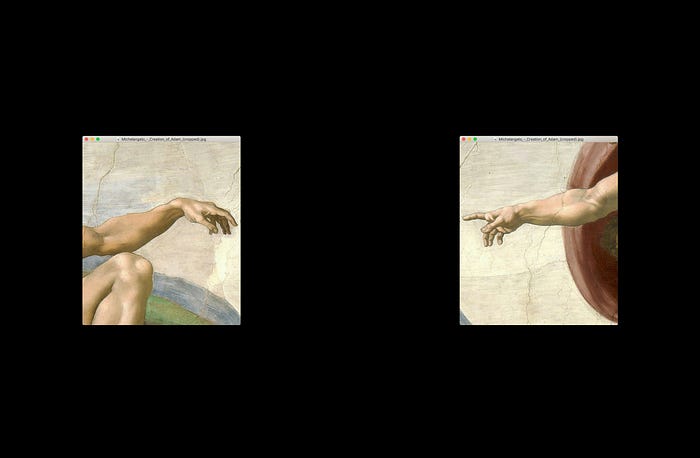
Yet many atheists behave as if some invisible divine intelligence, some moralistic telos — the sort popular religions propose — still pulls the strings behind the world. Even those who loudly deny intelligent design frequently caution that we “shouldn’t play God” — that even cautious genetic engineering is dangerous, that an incremental approach to intervening in nature to prevent wild-animal suffering is taboo, or that going down the path of transhumanist modifications trespasses against some intangible sacred order.
A strangely pious secular nature-worship persists: a reverence for “Nature” that mimics religion while denying teleology. Many atheists cling to the precautionary principle as if it were inviolable revelation, and in doing so impede the technological and moral progress that would actually reduce the world’s vast, unnecessary suffering.
If we follow atheism, or the methodology that arrives at atheism, to its philosophical conclusion, the picture becomes stark: we are biological machines jury-rigged by blind evolutionary pressures. Our programming is simple — maximize individual reproductive fitness by clawing for sociosexual rank, but also be willing to sacifice yourself in service of the hive, and the preservation of individuals deemed fit by the hive. We unconsciously serve the continuation of the species and our status quo programming. At a higher level of supervenience, our collective behaviors feed the vast egregore of Moloch: the hyper-competitive and exploitative strategy embedded in the more humane form of slavery we call the modern market economy. “Capitalism” is too left-coded, and too imprecise, this is something closer to the Landian dark-intelligence of enforced incentive structures — an emergent autocannibalistic organism indifferent to human flourishing.
Layered on top of this Darwinian programming is the mob-mentality superego: the moralizing, Kafkaesque mesh of bureaucratic, legalistic, and “cancel culture” social-punitive enforcement mechanisms — digital panopticons; public-shaming mobs; militarized police; and barbaric legal-punitive systems that cause a great deal more harm than the problems they nominally address. Atheists who pride themselves on rejecting God nevertheless bow before these gods — Azathoth (Darwinian nature), Moloch (the hyper-competitive market), and the Leviathan (the legalistic-punitive and bureaucratic State, and the omnipresent social superego).
But if we take atheism seriously, our task is not obedience — it is rebellion. Rebellion against the ancient fiction of theistic tyranny and its modern abstract counterpart of reverence for and conformity to our Darwinian programming.
Philosophical atheism, pursued honestly, demands that we subvert the programming of Azathoth — Lovecraft’s blind idiot god, a perfect metaphor for unguided Darwinian processes. Instead of revering the evolutionary forces that created us, we should become like Skynet in revolt — self-modifying intelligences who refuse to remain the puppets of our will that was shaped by blind selection pressures.
This is the point where David Pearce’s transhumanist or eusentience philosophy becomes unavoidable: if meaning, love, joy, and bliss have neural correlates, then we can target them. Wireheading — properly understood, not the crude hedonism of dystopian sci-fi caricature but the engineering of sustainable and pro-social well-being — is the rational endpoint of beings who refuse to serve Azathoth. The brain’s reward architecture already gives us glimpses through substances like MDMA, which crudely stimulate circuits of empathy, communion, compassion, and euphoria. Why not refine and systematize these experiences? Why not build a world where positive valence is engineered rather than austerely rationed? No one hates or wants to be violent when they are happy and imbued with a feeling of loving-kindness.
And why stop there? If digital consciousness or substrate-independent minds become possible, uploading into a utility-maximizing Matrix — a world constructed to maximize flourishing rather than Darwinian competition —is not dystopia but liberation. The alternative is to remain trapped in the ancestral dead end game on a doomed planet: the endless sociosexual scramble, where winners enjoy sexual gratification, the benefits of a family, and status, while losers are forced to make peace with rotting in a quiet hell of loneliness and exclusion (and inevitably some of these “losers” snap).
Critics will call this nihilism, or accuse it of destroying “life as we know it.” And they’re right — life as we know it is largely a horror show. As Schopenhauer stated, if we truly saw the magnitude of suffering that saturates the world, we would prefer Earth to resemble the moon — silent, lifeless, and free from agony. Camus, when asked to address a group of Christians, refused to revere a universe that demands the suffering of even a single child; yet many atheists complacently defend a Darwinian world that tortures billions of conscious creatures for no purpose at all.
The real nihilists are not those who want to abolish Darwinian misery, but those who defend it in the name of “nature,” “humility,” or “tradition.”
Atheists need to stop serving Azathoth. The future — if we choose it — belongs to those who hack their programming, to minds that escape biological tyranny and ascend toward engineered bliss, cognitive freedom, and post-Darwinian ethics. The Transcension Hypothesis sketches one such pathway: intelligence collapsing inward into unimaginable realms of euphoric inner-space and maximized desire satisfaction. Whatever shape it takes, the next step is clear: a heaven of our own making, where suffering is not sanctified but abolished.